
The television industry has evolved dramatically, but one thing remains true: TV is still TV. Whether watched via broadcast, cable, or streaming, the core experience of viewing premium content on a big screen remains unchanged. At the end of the day, TV remains a powerful medium for storytelling and connecting with audiences.
What has changed though is how content is delivered and monetized. Linear TV still accounts for more of the TV ad spending due to higher ad loads and entrenched buying practices, but Connected TV (CTV) has grown rapidly thanks to the rise of ad-supported tiers, live programming on streaming platforms, and increased ad supply (Digiday).
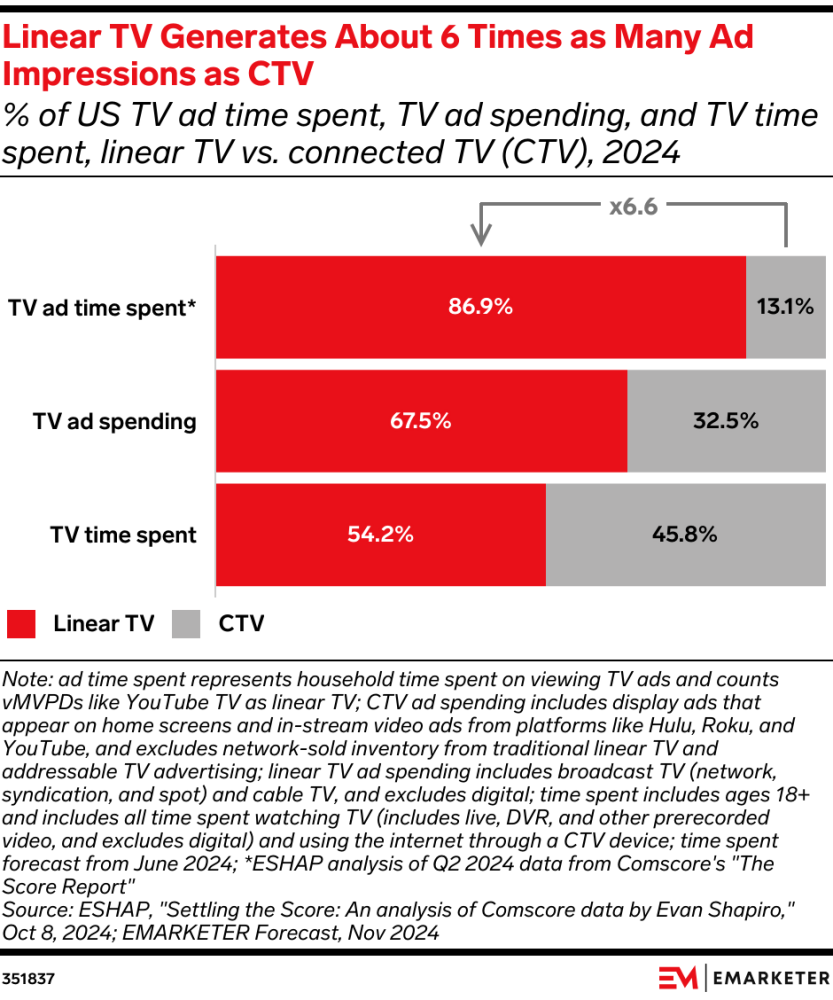
While the traditional TV players are now leaning into technological innovations such as programmatic advertising and self-served platforms, the tech and streaming players have begun adopting traditional TV business models and practices. Understanding the convergence between these two formats is critical for advertisers aiming to implement cohesive, cross-channel strategies.
Streaming is the New Cable: Familiar Business Models Persist
When streaming platforms like Netflix first emerged, they positioned themselves as disruptors to cable, but over time, they have embraced traditional TV practices and effectively returned to what feels like the TV that we’ve been accustomed to for years. Here’s some examples how:
1. Ad-Supported Tiers & Live Programming: Platforms like Netflix, once ad-free, have introduced ad-supported tiers with significant adoption among new subscribers (AdExchange). Live sports programming further integrates linear ads into streaming feeds, normalizing ads on CTV even for “ad free” platforms such as MLB on Apple TV+.
2. Content Syndication: The long-standing practice of content syndication thrives with the rise of FAST (Free Ad-Supported Streaming Television) channels. Just as diginets (e.g., MeTV, Bounce TV) emerged during TV’s analog-to-digital shift in the 2000s and monetized legacy content libraries, FAST channels offer an additional distribution option for content owners as well as new opportunities for advertisers to reach audiences (New York Magazine).
3. Lean-Back Viewing Experiences & FAST Channels: Many streaming services now offer curated programming feeds, such as Disney+ “Streams”, replicating the passive, lean-back experience of traditional TV (The Wrap). FAST Channels also mirror the passive viewing experience with linear programming. Whether on linear TV or CTV, the shared and passive viewing experience remains integral to household entertainment for lean-back, always-on content.
4. Upfront Ad Sales & Scatter Market: Despite speculation about the decline of the Upfronts over the years, streaming platforms like Amazon have embraced the Upfront model (The Hollywood Reporter), where brands secure long-term ad commitments just as they have for decades with TV advertising. Larger brand advertisers tend to dominate these negotiations, but programmatic platforms are increasingly making the Scatter market inventory more accessible for small to mid-size and performance/direct response advertisers.
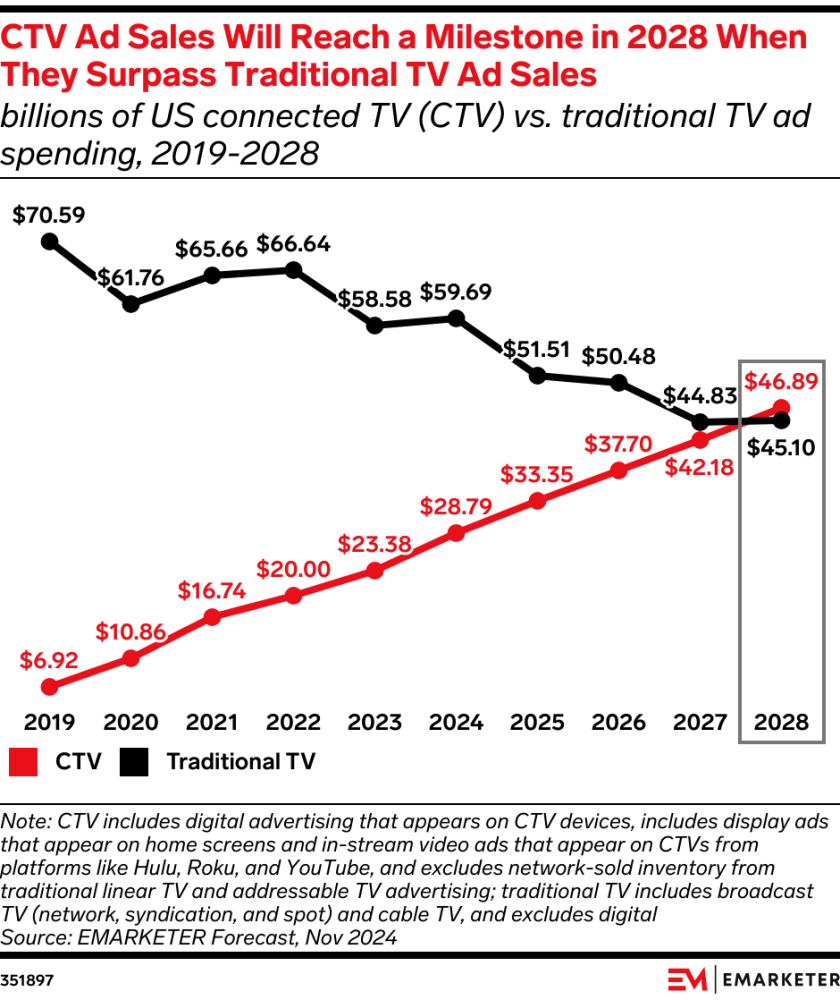
As traditional TV practices are adapted for streaming and traditional TV players embrace technological innovations, advertisers must utilize a holistic video strategy that bridges offline and digital platforms. According to eMarketer, CTV ad sales will surpass linear by 2028, making it essential for advertisers to optimize their CTV campaigns now.
TV is TV, No Matter How You Watch It
No matter how much the industry evolves technologically, the way people enjoy TV stays the same. Whether it’s catching a sports game on a familiar broadcast channel or streaming the latest hit on Netflix, the big screen continues to be the centerpiece of household entertainment.
Fortunately, what performs well on linear TV for audiences in terms of programming and genres resonates equally on streaming platforms. For instance, sports programming that engage viewers on familiar broadcast networks will create the same connections when delivered via streaming – the benefit with CTV is reaching previously untapped audiences by utilizing streaming platforms with enhanced audience and contextual targeting.
From a holistic perspective, ads that align with the context of its surrounding programming are more likely to resonate with audiences since TV is a story-driven and contextual medium, reflecting how TV has historically been planned and bought by targeting relevant networks and programming for target audiences.
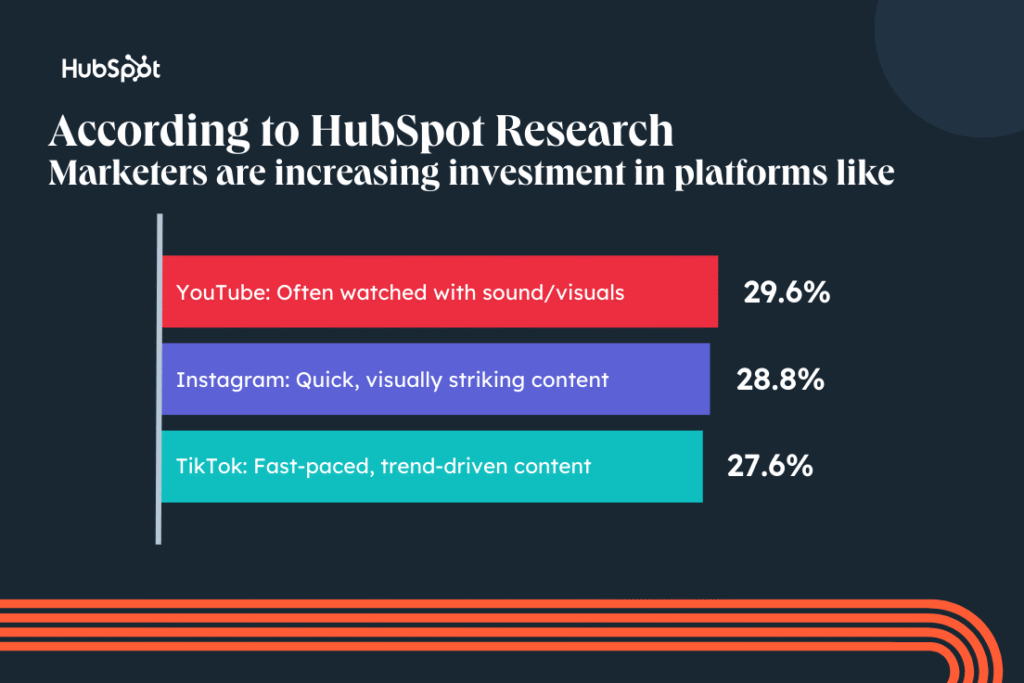
Unlike social and online video, which are often consumed on mobile devices, CTV provides full sight, sound, and motion which delivers a more immersive ad experience. Although some digital formats leverage both sound and visuals, most creatives are optimized using a silent video strategy (HubSpot).
While social and online video creative assets can be repurposed for CTV, advertisers must optimize video ads towards the strengths of each platform and consider TV’s unique attributes, including:
- Co-viewing experiences (multiple household members watching together)
- Audio-visual storytelling (compared to silent, text-heavy mobile video)
- Longer, story-driven formats (vs. short-form digital content)
Making Sense of the Jargon: Comparing Linear TV and Streaming
The advertising industry loves its acronyms and navigating the CTV landscape can be confusing with a flood of technical jargon. However, many parallels can be drawn between linear TV and streaming to simplify the different channels. Understanding these parallels helps advertisers create holistic video strategies that work across platforms; here’s how some key terms compare across Traditional Linear TV and Streaming:
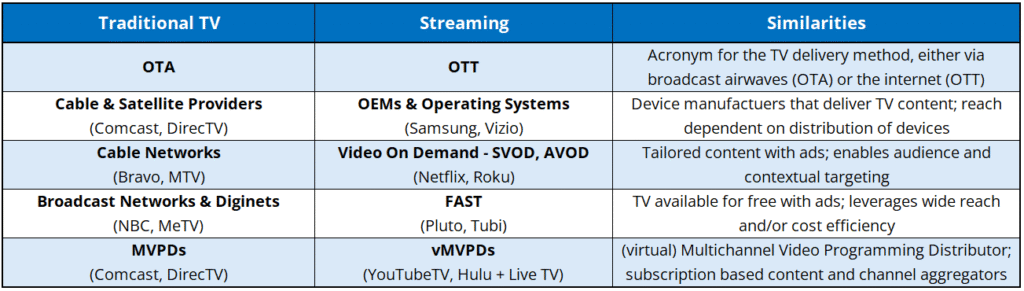
While this isn’t an exhaustive list, it highlights how streaming is, in many ways, just an evolution of traditional TV consumption. Understanding these parallels helps advertisers align strategies and effectively bridge platforms.
Looking Ahead: Balancing Innovation and Tradition
CTV is the fastest-growing ad channel, projected to see 18.4% YOY growth in 2025, while linear TV is expected to decline by 12.7%, according to IAB.
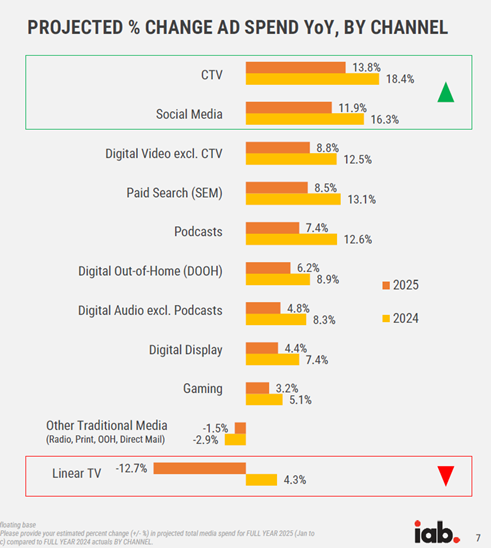
While linear TV still commands significant ad spend, CTV innovation is rapidly reshaping the landscape. By leveraging linear TV’s scale and storytelling power alongside CTV’s precision targeting and dynamic creatives, advertisers can craft holistic strategies that deliver maximum impact by:
- Using linear TV’s scale & cost efficiency while leveraging CTV’s digital precision & targeting
- Bridging brand and performance media across both traditional TV and streaming
- Ensuring creatives resonate with audiences with the full sight, sound, and motion of TV
Conclusion: The Future of TV Advertising
Despite changing viewing habits, TV remains a powerful storytelling platform, whether on broadcast, cable, or streaming. As Linear TV and CTV converge, advertisers have an unprecedented opportunity to integrate campaigns across formats, leveraging strengths from both traditional linear TV and CTV.
To stay ahead, brands should:
- Embrace experimentation: Use CTV’s test-and-learn capabilities for scalable insights.
- Adopt a holistic approach: Bridge traditional and digital TV strategies.
- Align creatives to context: Tailor ads to the platform and programming environment.
As audience behaviors evolve, so must advertising strategies. The future belongs to those who innovate, adapt, and connect with viewers across the converged TV ecosystem.
How are you balancing Linear TV and CTV in your media mix? Let’s discuss!
At Three First Names & Associates , we bring a unique and forward-thinking approach to Connected TV by combining a deep expertise in TV advertising with a creative passion for the music industry. Founded by Nathan Michael Scott, our consulting firm leverages nearly a decade of experience in media and advertising to guide brands and agencies through the transition from traditional TV to streaming.