
The rise of Connected TV (CTV) has transformed advertising by blending the broad reach and credibility of traditional TV with the precision of digital platforms. Unlike linear TV which has historically lacked transparency, CTV enables advertisers to optimize campaigns using a full-funnel, data-driven approach. However, for those new to CTV, understanding relevant metrics and optimization strategies can be daunting, especially without historical benchmarks.
To bridge this gap, I’ve developed a straightforward framework to help advertisers optimize their CTV buys, even without prior data.
1. Start with Clear Business Objectives
The foundation of any successful campaign is clarity on what you want to achieve. Before diving into metrics or optimization strategies, define your primary goals:
- Brand Campaign: Are you aiming to increase visibility and reach among your target audience?
- Performance Campaign: Are you focused on driving conversions or maximizing ROI?
Once you’ve set your goals, assess the metrics you have available and determine which align the best. For example:
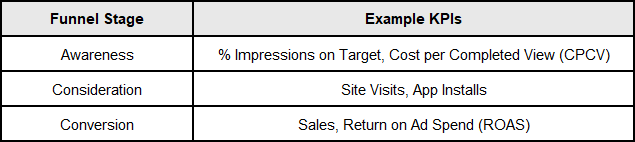
- Upper-Funnel Focus (Brand Awareness): Metrics like target impressions, reach, and frequency are relevant
- Lower-Funnel Focus (Performance and ROI): Conversions, website traffic, and return on ad spend (ROAS) should take precedence
Pro Tip: If using multiple platforms, ensure you understand how each defines key metrics as methodologies can vary.
2. Understand Your CTV Buying Options
How you purchase CTV inventory impacts your flexibility to optimize campaigns. Consider the two primary models for TV advertising:
Upfront Buys
- Advantages: Secure premium inventory during high-demand periods (e.g., popular TV programs and tentpole events)
- Considerations: Requires long-term planning. Use cancellation windows wisely to reallocate budgets if performance is below expectations
Scatter/Remnant Inventory
- Advantages: Offers flexibility to shift budgets dynamically and explore diverse inventory options
- Considerations: May have limited availability and lack access to top-tier programming
Understanding how your CTV inventory is bought will clarify how to best optimize your buy, whether it’s across all publishers within your buy or focused on a specific partner.
Pro Tip: Combine upfront and scatter buys to balance premium access with budget flexibility. Use upfront buys for known, high-performing publishers, and scatter for testing new opportunities or filling gaps in reach.
3. Select and Track the Right KPIs
To effectively optimize CTV campaigns, focus on five KPIs that align with your goals. Here are KPI considerations for specific stages of the marketing funnel:
Regularly measure KPIs across publishers and platforms to identify trends and opportunities for optimization. If historical benchmarks are unavailable, performance across publishers can be assessed based on the average over a given time period.
4. Grade Performance and Optimize Ad Spend
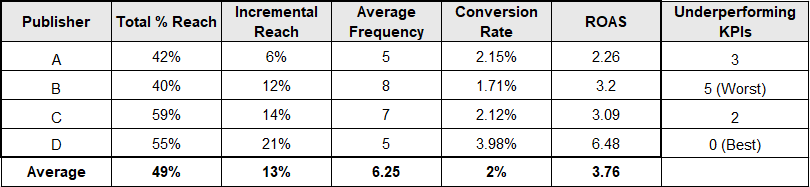
A key strength of CTV is the ability to dynamically allocate budgets based on performance with real-time data. Use your KPIs to grade publisher performance and reallocate budgets based on results. Below is an example of how this can be applied:
Key Insights:
- Publisher B significantly underperformed across all KPIs, with high frequency and low reach indicating oversaturation as well as low ROAS suggesting poor targeting
- By reallocating spend from Publisher B to top performers like Publisher D, advertisers can optimize results
Pro Tip: The following reallocation strategy can provide guided recommendations for optimizing campaign spend:
- Underperformed on 3 KPIs: Reallocate 25% of spend to top performers
- Underperformed on 4 KPIs: Reallocate 50%
- Underperformed on all 5 KPIs: Reallocate 100%
5. Dive Deeper into Placements and Creatives
Publisher performance is just one layer of optimization. Use the same grading framework to evaluate individual placements and creatives within a publisher for deeper optimizations. For example:
- Determine if certain placements within publishers are driving inefficiencies
- Evaluate which creative messages resonate most with your audience
This granular analysis helps uncover high-performing strategies or areas needing adjustment by applying a consistent framework to understand performance based on your business objectives.
6. Embrace a Test-and-Learn Approach
CTV optimization is not a one-time task and requires continuous iteration. Establish a feedback loop:
- Set Hypotheses: Start each campaign with specific hypotheses, such as “Lower frequency caps will improve conversions.”
- Test and Measure: Regularly test variables like targeting, creatives, and inventory types
- Refine Based on Insights: Use test results to refine future campaigns
Pro Tip: After accumulating sufficient data, replace “average” benchmarks with historical ones for more precise optimizations.
Why Optimizing CTV Matters for Advertisers
Unlike linear TV where the mindset has traditionally been to “set it and forget it”, CTV empowers advertisers with the tools and transparency to make smarter decisions. As CTV continues to grow, advertisers who embrace a data-driven framework will unlock its full potential. By following this framework, you can:
- Maximize your campaign’s impact based on real-time performance
- Optimize your ad spend responsibly
- Build a foundation for long-term success in this evolving landscape
Have questions about optimizing your CTV strategy? Or perhaps you’ve uncovered your own winning formula? Let’s continue the conversation – I’d love to hear your insights and experiences!