
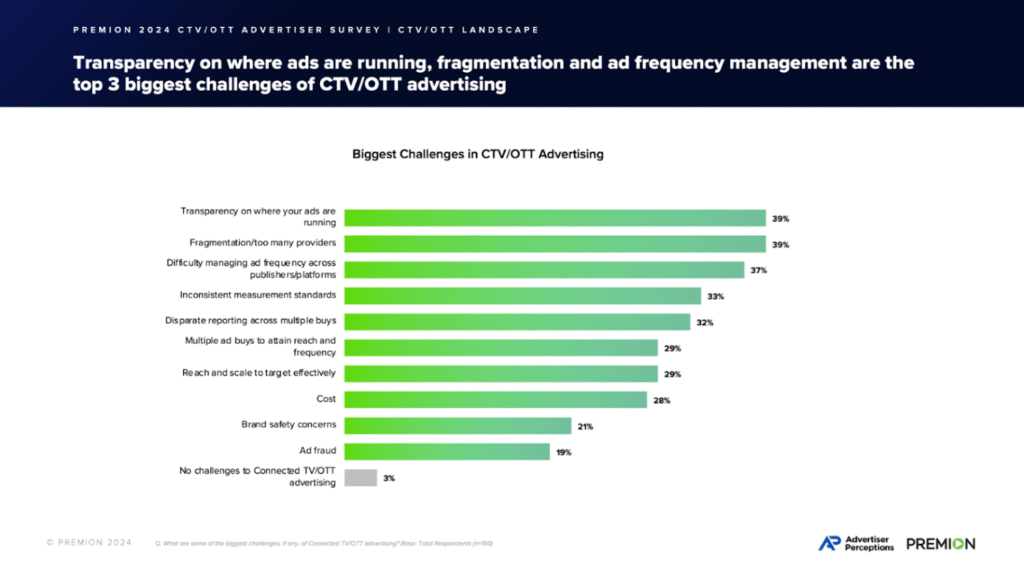
If you’ve ever experienced the frustration of seeing the same ad over and over while streaming a show, you’re not alone. As the TV landscape has become increasingly fragmented, advertisers are finding it more challenging to manage ad frequency across platforms. A 2024 study conducted by Advertiser Perceptions highlights this issue, identifying ad delivery transparency, frequency management, and platform fragmentation as top challenges for Connected TV (CTV) advertising (source).
Overexposing viewers to ads on CTV isn’t just inefficient; it can actively harm brand perception. In fact, 16% of viewers are less likely to consider purchasing from a brand if they see its ad too frequently, according to a February 2024 report by MiQ (source). However, utilizing multiple platforms is often necessary in building reach which highlights a key challenge: balancing incremental reach with responsible ad frequency in the fragmented CTV ecosystem.
Below, we’ll explore why managing ad frequency is so challenging on CTV and provide some practical strategies to overcome those challenges.
Challenges with Managing Ad Frequency on CTV
The shift from linear TV to CTV has introduced greater flexibility and precise targeting options, but it has also led to a fragmented ad landscape with unique technical challenges. Unlike traditional TV, where ads are shown uniformly across viewers with linear inventory management, on-demand CTV ad inventory is distributed across multiple disconnected platforms, making frequency management more complex. Here’s a look into why advertisers often struggle with managing frequency caps on CTV:
1. Fragmented Sales Paths and Siloed Platforms
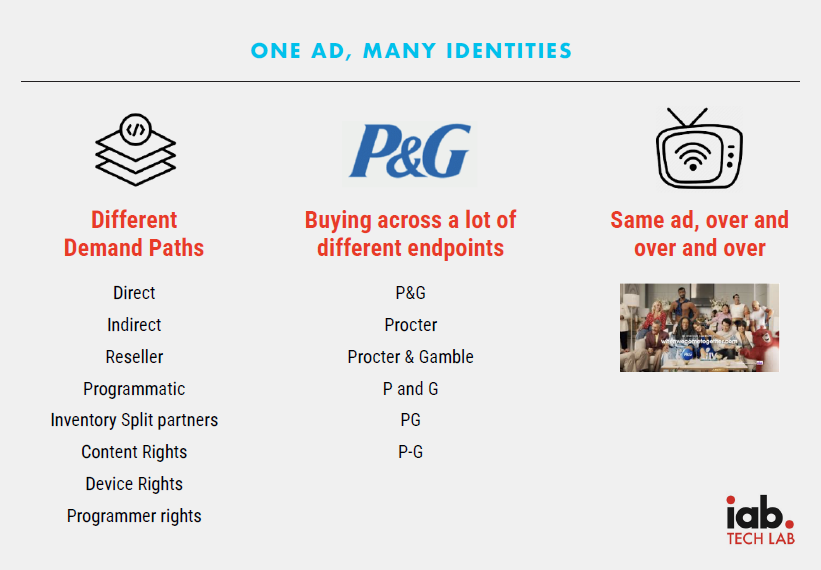
Due to CTV’s complex media rights structure, ad inventory is split across various rights owners, including content owners, streaming platforms, and device manufacturers. Each company manages its own ad sales with different platforms and often relies on resellers – in some cases, up to 59 different intermediaries can be involved in a single bid for an impression (source). Advertisers may also be required to use multiple platforms to cover their entire CTV buy if they are conducting direct deals with streaming partners as well as buying programmatically through their preferred DSP. As a result, some viewers may see the same ad repeatedly since the different platforms do not communicate with each other and the ad inventory may not be mutually exclusive, leading to inefficient ad spend and missed opportunities for incremental reach (source).
Below is an example from IAB Tech Lab illustrating how multiple paths to purchase streaming inventory can result in repetitive ad exposure:
2. Lack of a Universal Creative ID
For decades, traditional TV has relied on standardized creative identifiers, such as Ad-IDs and ISCIs, to track ad exposure across networks. However, CTV lacks a universal creative ID, leaving advertisers without a reliable way to monitor ad frequency consistently across platforms (source). Without this standardization, it’s difficult to enforce unified frequency caps across channels, resulting in ad fatigue as viewers encounter the same creative across different CTV platforms. This lack of control not only frustrates viewers but also results in wasted ad spend (source).
3. Linear TV Ads Appearing in Streaming
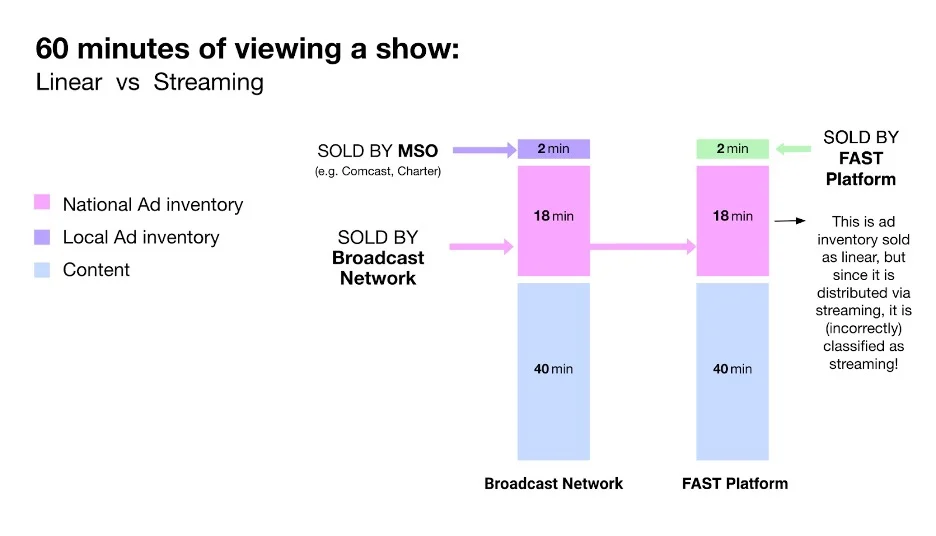
When a linear TV program is streamed via CTV, the national ads sold through linear TV buys can often carry over into the streaming version of the program, especially during live sports and other high-profile tentpole events. While CTV uses ad servers for dynamic creative insertions, linear ads are embedded directly into the program feed, making them visible across both linear networks and streaming platforms. This setup means viewers may see the same ad multiple times if an advertiser buys inventory directly from a linear network and the same program is bought programmatically through a DSP.
Below is an example of how ad inventory can be allocated comparing a Linear Broadcast Network with a FAST platform from the following article which estimates that 25% of streaming inventory can only be purchased via linear TV buys (source):
Solutions for Managing Frequency Responsibly:
Despite these challenges, there are ways to manage ad frequency more effectively on CTV. Here are approaches to improve campaign performance and viewer experience:
1. Implement a Standardized Creative Ad ID
A standardized creative ID across CTV partners would improve tracking and frequency control by allowing advertisers the ability to reconcile creatives consistently across platforms. The Interactive Advertising Bureau (IAB) has been promoting the Ad Creative ID Framework (ACIF), which would allow advertisers to manage frequency caps more effectively across both CTV and linear TV. Implementing a universal creative ID would let advertisers track ad exposure more accurately and ensure viewers aren’t overexposed.
Side note: IAB is hosting a webinar on 11/20 to discuss cross-platform advertising improvements by implementing the ACIF.
2. Leverage Third-Party Tools and Partners for Frequency Management
Third-party DSPs and measurement tools can provide unified frequency management across multiple platforms, allowing advertisers to efficiently track impressions at a holistic level. While advertisers can manually track post logs to manage frequency, the fragmented CTV media landscape often requires labor-intensive data collection to piece together insights from disparate sources. Automating this process with third-party tools saves time, improves the viewer experience, and ensures that frequency caps are effectively managed without manual tracking. Additionally, consolidating buys in a singular DSP with the help of trusted partners can allow advertisers to manage frequency at scale and avoid wasted spend.
3. Utilize an Omnichannel Strategy for Effective Brand Messaging
Collaborating across teams responsible for each channel can help reduce ad fatigue by creating a seamless, unified brand message tailored to each channel. An effective omnichannel strategy ensures that audiences encounter consistent messaging across all platforms while intentionally optimizing creatives towards the strength of each channel. Here’s how a coordinated cross-channel strategy with Linear TV and CTV can work effectively:
- Coordinate Brand Campaigns with Channel Optimizations: Effective cross-channel advertising requires collaboration to maintain brand consistency while adapting creatives to each platform’s unique strengths. Brand-focused creatives are ideal for linear TV, where broad reach reinforces brand identity among a wide audience. On CTV, the same creatives can be optimized for performance with targeted post-production tweaks, such as custom end cards, tailored calls to action, or adjusted visuals and music that resonate with specific audiences. Aligning teams to use consistent branding across linear and CTV allows for a cohesive presence, while CTV-specific optimizations and creative variations maximize engagement without causing viewer fatigue.
- Leverage Contextual and Audience-Based Targeting: Combining contextual targeting with audience-based targeting enables advertisers to broaden their reach and drive performance. Contextual targeting with Linear TV and CTV allows advertisers to place ads in relevant content genres at more cost efficient CPMs to reach a wider audience. Layering in audience-based targeting tactics and optimized creatives with CTV can then capture viewers who are likely to engage, creating a balanced strategy that reduces ad fatigue and maximizes reach.
- Utilize Exclusion and Inclusion Lists: For advertisers purchasing CTV inventory directly from streaming partners and programmatically through DSPs, exclusion lists prevent duplicate exposure by keeping platforms from direct buys out of DSP-based campaigns. Alternatively, inclusion lists help DSP campaigns reach viewers who haven’t been targeted through direct buys, expanding reach without increasing frequency. This method diversifies ad exposure while effectively managing frequency across platforms.
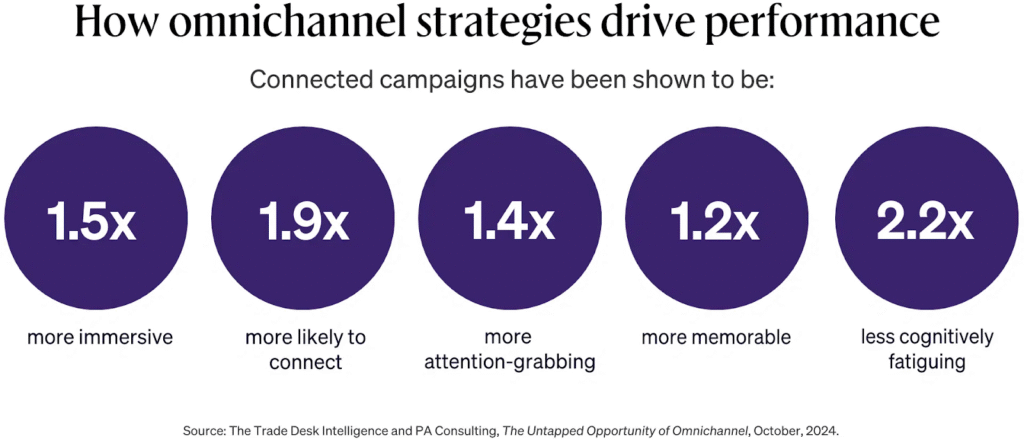
Data shows that connected omnichannel campaigns are 2.2 times less fatiguing to viewers than campaigns that aren’t coordinated across channels. A thoughtful cross-channel approach allows brands to reinforce their messaging while respecting viewer thresholds (source).
Takeaway for Advertisers
Although more advertisers are adopting holistic omnichannel strategies each year, many still operate TV and digital video as separate silos. Managing reach and frequency in CTV is essential to delivering a positive viewer experience, and success will require active collaboration across channels. Here’s a recap of key takeaways for advertisers:
- Cross-Channel Collaboration is Essential: Effective CTV advertising requires teamwork and shared strategies across TV and digital media teams. For brands with fragmented team structures, a collaborative approach can unify efforts and reduce redundancy in ad exposure.
- Test and Optimize Regularly: Unlike linear TV, CTV offers advertisers enhanced flexibility to test and optimize creatives throughout a campaign. By adopting a data-driven testing mindset, advertisers can refine their reach and frequency strategies for optimal results.
- Partner with CTV Experts: Trusted partners with expertise in both CTV and traditional TV can guide advertisers through the fragmented landscape, optimizing their campaigns for maximum efficiency.
Whether you are looking for someone to help make sense of the TV landscape or need additional support coordinating cross-channel video strategies, Three First Names & Associates is here to help brands and agencies excel with CTV advertising!